Trump cancelled the livestream, not the execution.
Section 1 of 9 · Introduction
Trump cancelled the livestream, not the execution.
The administration planned to make a firing-squad execution available to an online audience. On 15 October 2026, Trump withdrew the broadcast while retaining the execution plan. The distinction is the case: ending the spectacle and ending the killing are different decisions.
On 15 October 2026, Trump cancelled the planned livestream of Nidal Hasan’s firing-squad execution. Reuters reported his statement: “He will die, as scheduled, by firing squad, but this event will not be streamed.” [2] The cancellation concerned transmission. It was not a commutation.
The Army’s 7 October announcement says Trump approved the death sentence on 2 October and the Army directed execution by firing squad at Fort Hood on 3 December 2026. [1] That is the announced schedule at publication, not a completed execution or a guarantee against subsequent legal delay.
The planned broadcast was real, not a fictional extrapolation from Trump’s rhetoric. Associated Press reporting recorded Hegseth’s public-execution announcement and the Pentagon’s confirmation of livestreaming. [3] The state was preparing both an act of punishment and an audience for it.
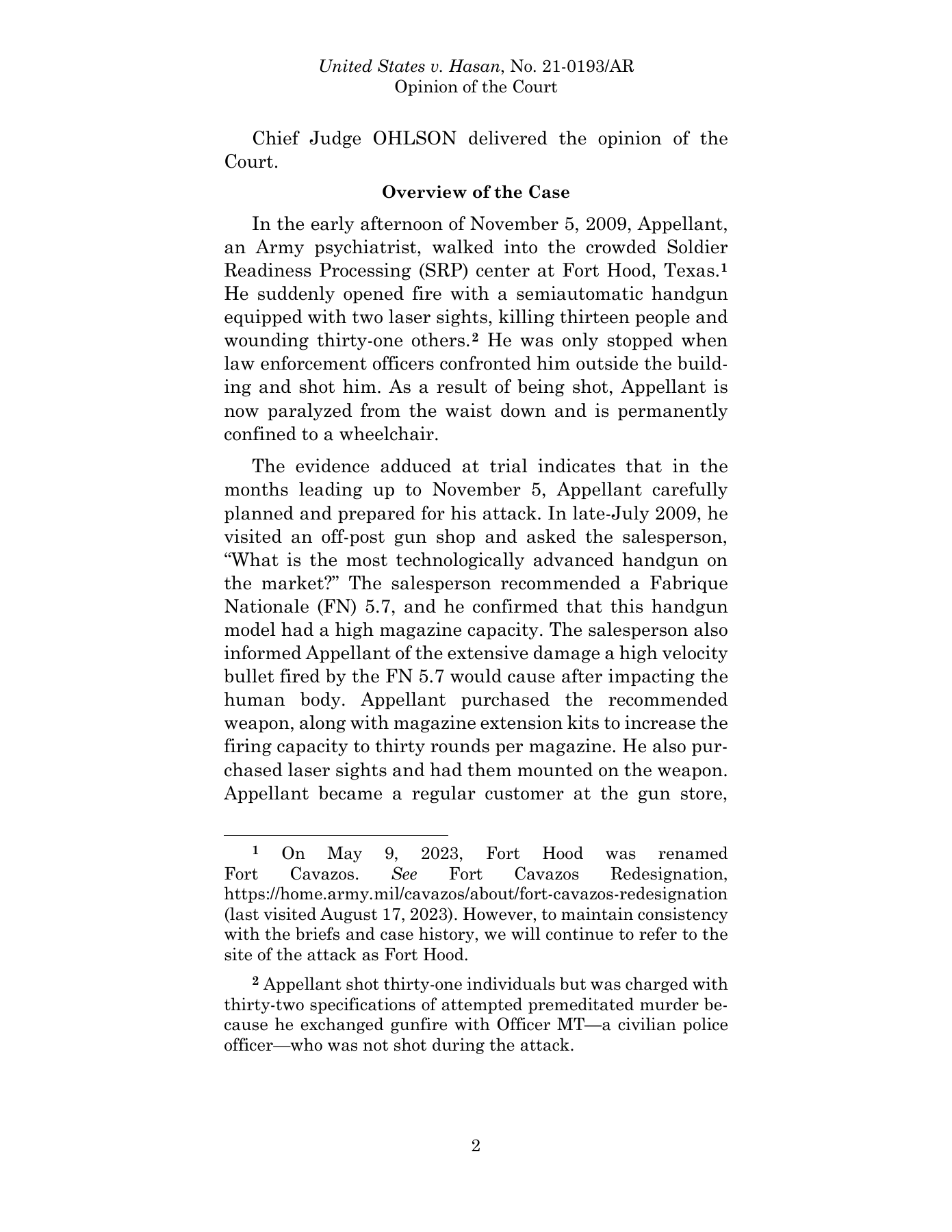
The victims belong in the record. Hasan’s military appellate opinion describes thirteen people killed and thirty-one wounded in the 2009 Fort Hood attack. It explains that the thirty-two attempted-murder charges included an officer who exchanged fire but was not shot. [7] Condemning the broadcast proposal does not require softening the crime or turning the people killed into scenery for a political argument.
The invention examined here is the conversion of a penal procedure into a distributed public event. A witness observes something that happens. A state broadcast also decides what an audience is invited to see, when to see it and what lesson the image is supposed to deliver.
A conviction establishes criminal responsibility through a legal process. It does not establish the public benefit of making the prisoner’s death available as a stream. That is an additional policy choice requiring an additional justification.
The editorial objection is to treating the power to punish as permission to stage a lesson through a person’s dying. A condemned murderer does not become innocent because a camera arrives. Nor does the government’s camera become morally neutral because the person is guilty.
Trump’s reversal retained a deterrence rationale: he suggested public streaming might have discouraged others, while acknowledging opposition to watching the death. [4] That is an asserted possible benefit. It does not supply evidence that broadcasting this execution would reduce future violence.
The National Research Council’s 2012 review found the research then available unsuitable for determining whether capital punishment increased, decreased or had no effect on homicide rates. The comparison with alternative punishments was central to that limitation. [6] This is a dated research assessment, not a current experiment on livestreamed executions or proof that deterrence is impossible.
The broadcasting claim requires a further step: what does adding the audience change beyond announcing the sentence or carrying it out? Reach and deterrence are different outcomes. A video can attract attention without showing that fewer people will commit violence.
Once distributed, a recording can also be cropped, replayed and attached to explanations the original broadcaster does not control. That is a general property of circulating digital images, not a claim that this cancelled stream was recorded or published. The government’s preferred caption would not own the image’s future meaning.
Opposition to the stream did not come from a single position on capital punishment. AP reported bipartisan criticism, including warnings about radicalization, and the Pentagon’s subsequent statement that Hegseth supported Trump’s cancellation. [4] Objections to a broadcast cannot automatically be counted as support for abolishing the death penalty.
On 9 October, Archbishop Paul Coakley, president of the US Conference of Catholic Bishops, condemned the livestream proposal while explicitly refusing to condone Hasan’s actions. His statement argued that public execution would damage the country’s moral life. [5] That is an identified religious and ethical position, not a court ruling.
There is also an argument that visibility can make punishment more accountable. AP quoted law professor Deborah Denno suggesting that a broadcast could expose the reality of capital punishment to public scrutiny. [3] The argument deserves an answer: concealment can protect institutions from examination. But transparency should be judged by whether it enables independent scrutiny, not simply by whether the state supplies a moving image.
Independent witnesses, records of decisions, medical findings and access to challenge official accounts can serve accountability. A public stream does not replace those safeguards. Equally, cancelling a stream must not become a reason to stop examining the procedure that remains.
The dated records establish presidential approval of the death sentence, an announced firing-squad schedule, a planned livestream and its cancellation. They do not establish that an execution has occurred, that a broadcast exists or that the broadcast would have prevented terrorism.
The title names the limit of the reversal. Trump changed the plan for public viewing while maintaining the plan to execute. A reader can welcome one decision and oppose the other, or support the sentence while rejecting the stream. Those positions should be examined rather than merged into a single camp.
This article’s conclusion is that the audience was a separate political project. The state had a sentence before it proposed a livestream. The proposed audience could not make that sentence more judicial. It could make the act more visible, more distributable and more available for competing uses.
The record should therefore preserve both the announcement and the reversal. Cancelling a proposal changes its status. It does not remove the evidence that officials considered a prisoner’s death suitable for a public feed.
What is answered, and what remains open. The announcement, schedule and reversal are documented. The independent value of broadcasting, the full approval record and future execution status remain separate questions.
- What evidence would distinguish a deterrent effect from the public attention generated by broadcasting a death?
- Which records show who proposed, reviewed and authorized the livestream plan, and what assessment was made of its consequences for victims’ families, viewers and later reuse?
- With the livestream cancelled, what independent access and records will permit scrutiny of the execution process and any subsequent change to the announced schedule?
The broadcast lost its approval. The firing squad kept its appointment.
Sources
- US Army Public Affairs, 7 October 2026: presidential approval, direction and scheduled date; an official announcement, not proof of a future event.
- Reuters, 15 October 2026: cancellation of the livestream and Trump’s statement retaining the execution plan.
- Associated Press, report on the announced livestream, October 2026: Hegseth/Pentagon announcement and differing expert assessments, including the transparency argument.
- Associated Press, 15 October 2026: reversal, stated deterrence rationale, political objections and Pentagon response.
- USCCB, Archbishop Paul Coakley statement, 9 October 2026: primary religious response; the speaker’s position is attributed.
- National Research Council, Deterrence and the Death Penalty, 2012: limitations of the research available at that time; not a study of the proposed livestream.
- Court of Appeals for the Armed Forces, United States v. Hasan, revised opinion, 2024: p. 2 and footnote 2, victims and charge counts; p. 111, judgment. Copy preserved in the US Supreme Court docket, not a Supreme Court-authored opinion.
Status checked 16 October 2026. The execution is a scheduled future event. No execution footage is reproduced or implied to exist. The thumbnail is AI-generated conceptual art; the lead is a judicial source page. The closing appointment language describes the announced schedule and does not rule out legal delay.